A startup website template lets a new company launch a credible site in days instead of weeks, with pages for the product, pricing, team, blog and contact already designed. The best choice depends on who will build and edit the site, so this guide groups templates by format (HTML, Next.js, WordPress and Figma), compares free and premium options using data checked on 15 November 2026, and explains licences in plain language.
For GitHub templates we used the GitHub API on 15 November 2026 for stars, licence and last push. For other templates we read the official download or product page the same day. We earn nothing from third-party links. Test the demo and run a speed test yourself.
GitHub API and official pages, 15 November 2026.
| Template | Format | Price | Licence | Signal |
|---|---|---|---|---|
| Startup (HTML Codex) | HTML, Bootstrap 5 | Free | CC BY 4.0 | 31,048 downloads; modified 9 Mar 2026 |
| Startup Next.js | Next.js, Tailwind | Free | MIT | 1,688 stars; push 12 Dec 2025 |
| Simple Light (Cruip) | React/Next.js | Free | No licence file | 4,529 stars; push 12 Dec 2025 |
| Start Bootstrap Landing Page | HTML, Bootstrap | Free | MIT | 1,672 stars; push 8 Jul 2024 |
| Startup Figma (OrdainIT) | Figma | Free | Attribution | Design file |
| Saasty HTML (OrdainIT) | HTML | $9 | Commercial | 18+ home pages |
| Saasty Next.js (OrdainIT) | Next.js | $9 | Commercial | 18+ home pages |
| Sassty (OrdainIT) | WordPress | $13 | Commercial | Niche demos |
A free Bootstrap 5 startup template for IT and tech companies, licensed CC BY 4.0, with 31,048 downloads and a last modified date of 9 March 2026 on its page. CC BY means you must give credit; the page also offers paid credit removal. View Startup.
1,688 GitHub stars, MIT licence, last push 12 December 2025. A free Next.js and Tailwind template with home, about, pricing, blog, contact and sign-in pages for SaaS startups. GitHub.
4,529 stars, last push 12 December 2025. A clean Tailwind landing page; the GitHub API showed no licence file, so read the terms in the README before commercial use. GitHub.
1,672 stars, MIT, but the last push was 8 July 2024. A simple one-page Bootstrap template; fine for a quick launch page, but expect to update dependencies. GitHub.
A free Figma landing page for startups, agencies and IT services with hero, services, stats, testimonials and call-to-action sections, free for personal and commercial use with attribution. View the Figma template.

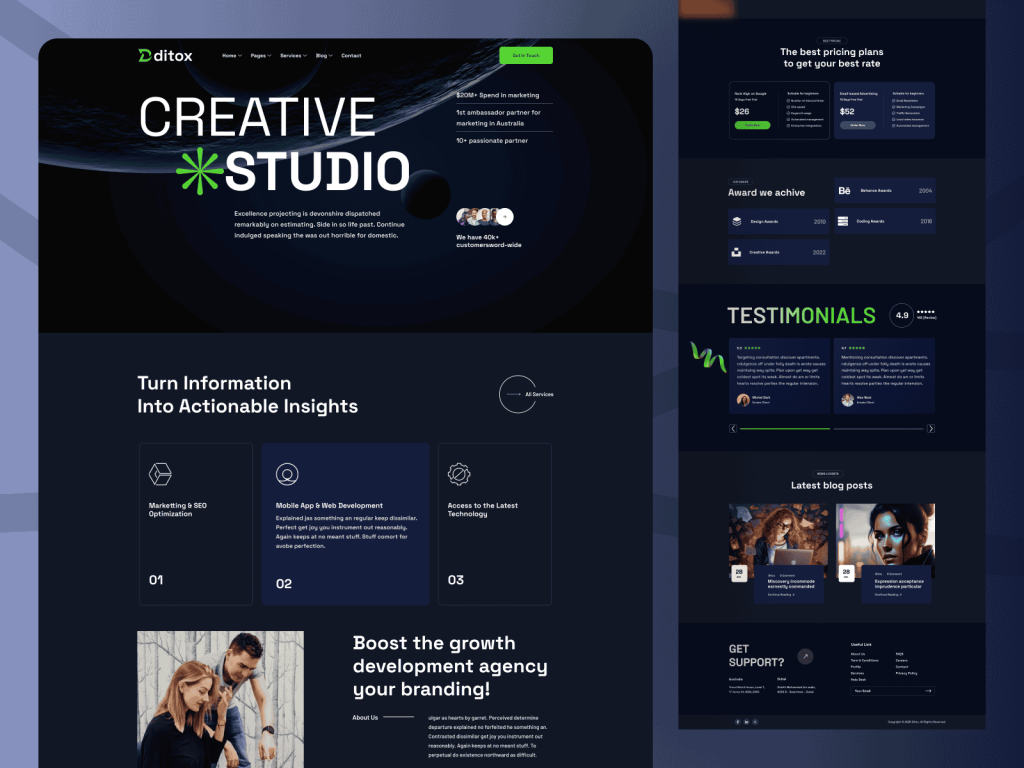
Prices on our site on 15 November 2026, all with free lifetime updates; we check speed and demos before release.
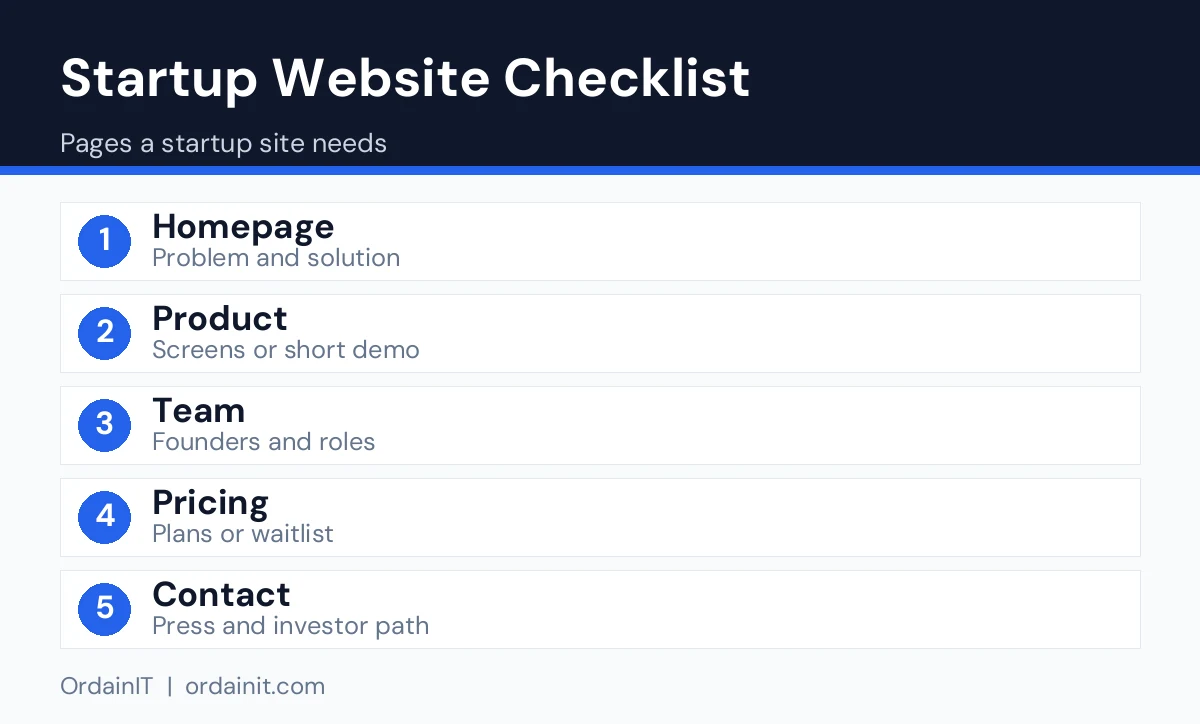
Templates come full of placeholder text, stock photos and invented numbers. Replace all of it before launch: an early visitor who sees a fake testimonial or a stock photo of a team that is not yours will trust you less, not more. Start with the home page headline: one sentence that says what you do and for whom. Then write the features page from customer problems rather than product specs. Use real screenshots of your product, even if it is an early version. If you have no customers yet, show the problem you solve, your team’s relevant experience and a clear way to join a waitlist or pilot.
Early-stage sites change often, so plan who edits what. A founder who will rewrite the home page weekly needs a visual editor or simple content files. A developer-run site can live in a Git repository where changes go through pull requests. Whichever you choose, keep content in one place, write down how to publish, and make sure at least two people know how to update the site. Avoid building custom features into the template too early; add them when customers ask.
A template saves design time but does not replace positioning work. Before choosing one, write down your audience, the main problem, your one-line promise and the single action you want visitors to take. With those four answers, it becomes clear which template has the right structure, and the build itself goes much faster.
A free template is the right call when cash is tight, the product is still changing, and someone on the team can edit code. A premium startup website template makes sense when you need many finished pages quickly, such as pricing, careers, blog and integrations, or when a non-developer will run the site. Either way, spend more time on words and real screenshots than on picking colours; those are what convince early customers and investors.
We recheck the licences, stars and downloads listed here regularly and update the table and date when they change.
Investors often visit a startup site before a first meeting. Make sure the about page names the founders, the problem and any traction you can share honestly, and that contact details are easy to find.
A ready-made website design for a new company, with pages such as home, features, pricing, team and contact that you customise with your own content.
Often, yes, for a first launch. Check the licence and maintenance, and plan to replace demo content fully.
A WordPress theme, because pages and blog posts can be edited without code.
For CC BY templates, yes, unless you buy credit removal. MIT templates only require keeping the licence notice in the code.
Yes, but it means rebuilding the site. Choose the format that fits your next 12 to 18 months.
Chosen a theme or template? The OrdainIT team, which designs and builds its own WordPress themes and templates, can also get your website live. Pick a fixed-price service:
Want a design to start from? Browse OrdainIT HTML templates, with lifetime updates, or see all WordPress services. Not sure what you need? Contact OrdainIT for a free, no-obligation quote.
See OrdainIT’s themes and customer ratings on OrdainIT’s ThemeForest profile.





 New release: