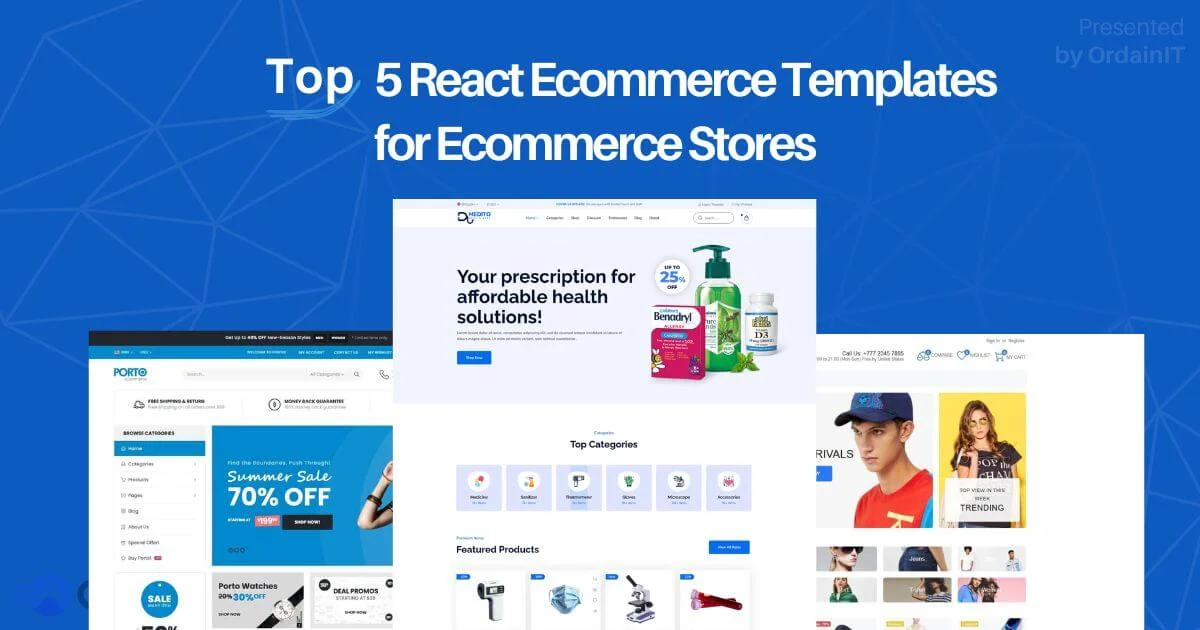
A React ecommerce template gives you a ready storefront built with React or Next.js: home, category, product, cart, checkout and account pages. The most important question is not the design but what sits behind it. Some templates are front-end only, some ship with a Node.js backend, and some connect to a commerce platform such as Shopify. This guide compares four options using their official pages on 14 November 2026, explains the three architectures, and shows OrdainIT’s React shop template.
If you are not a developer, a WordPress shop with WooCommerce or a hosted platform will be simpler. React storefronts suit teams that want speed, custom design and full control.
We read each ThemeForest item page or GitHub repository on 14 November 2026 and recorded price, sales or stars, rating, last update, stack and what the backend includes. Where a page contradicts itself we say so. We did not build a store with each one and we earn nothing from these links. OrdainIT sells a React template with a shop, described separately.
ThemeForest and GitHub pages checked 14 November 2026. Prices are Regular License. *Newest changelog entry is from August 2025.
| Template | Stack | Price | Popularity | Last update | Backend |
|---|---|---|---|---|---|
| PickBazar | Next.js, GraphQL, NestJS | $29 | 4,234 sales, 4.40 (73) | 29 Apr 2025 | Admin included; APIs labelled dummy |
| Ciseco | Next.js 16.3, React 19.3, Tailwind 4 | $39 | 728 sales, 4.36 (14) | 28 Oct 2026 | Front end only; demo cart |
| KachaBazar | Next.js, Express, MongoDB | $22 | 469 sales, 5.00 (16) | 21 Jul 2026* | Backend included; admin separate |
| Next.js Commerce | Next.js App Router | Free (MIT) | ~14,300 stars | Archived | Shopify and other platforms |
PickBazar by redqteam costs $29, has 4,234 sales and a 4.40-star rating from 73 reviews, and shows a last update of 29 April 2025. It uses React, Next.js, TypeScript, GraphQL, NestJS and Tailwind CSS and includes an admin dashboard. The changelog labels its GraphQL and REST APIs as dummy, so treat the backend as a starting point rather than production-ready. View PickBazar.
Ciseco by BooliiTheme costs $39, has 728 sales and a 4.36-star rating from 14 reviews, and was updated on 28 October 2026. It uses Next.js 16.3 with the App Router, React 19.3, TypeScript and Tailwind CSS 4, and also ships a plain HTML version, each with 25 routes including cart, checkout, orders and account. No backend is included: the bag, checkout and wishlist work only in the browser, and no payment provider is connected. View Ciseco.
KachaBazar by HtmlLover costs $22, has 469 sales and a 5.00-star rating from 16 reviews, and shows a last update of 21 July 2026, while the newest changelog entry is version 5.5.0 from August 2025. It is a grocery store template built with Next.js and Tailwind CSS, and it includes an Express and MongoDB backend. The admin panel is sold separately. View KachaBazar.
Next.js Commerce by Vercel has about 14,300 GitHub stars under the MIT licence. It is a server-rendered Next.js App Router storefront with Shopify as the reference provider and forks for BigCommerce, Medusa, Saleor, Swell and others. The repository is now archived and read-only, with development moved to Vercel’s new Shopify storefront, so use it as a reference rather than a maintained base. View on GitHub.

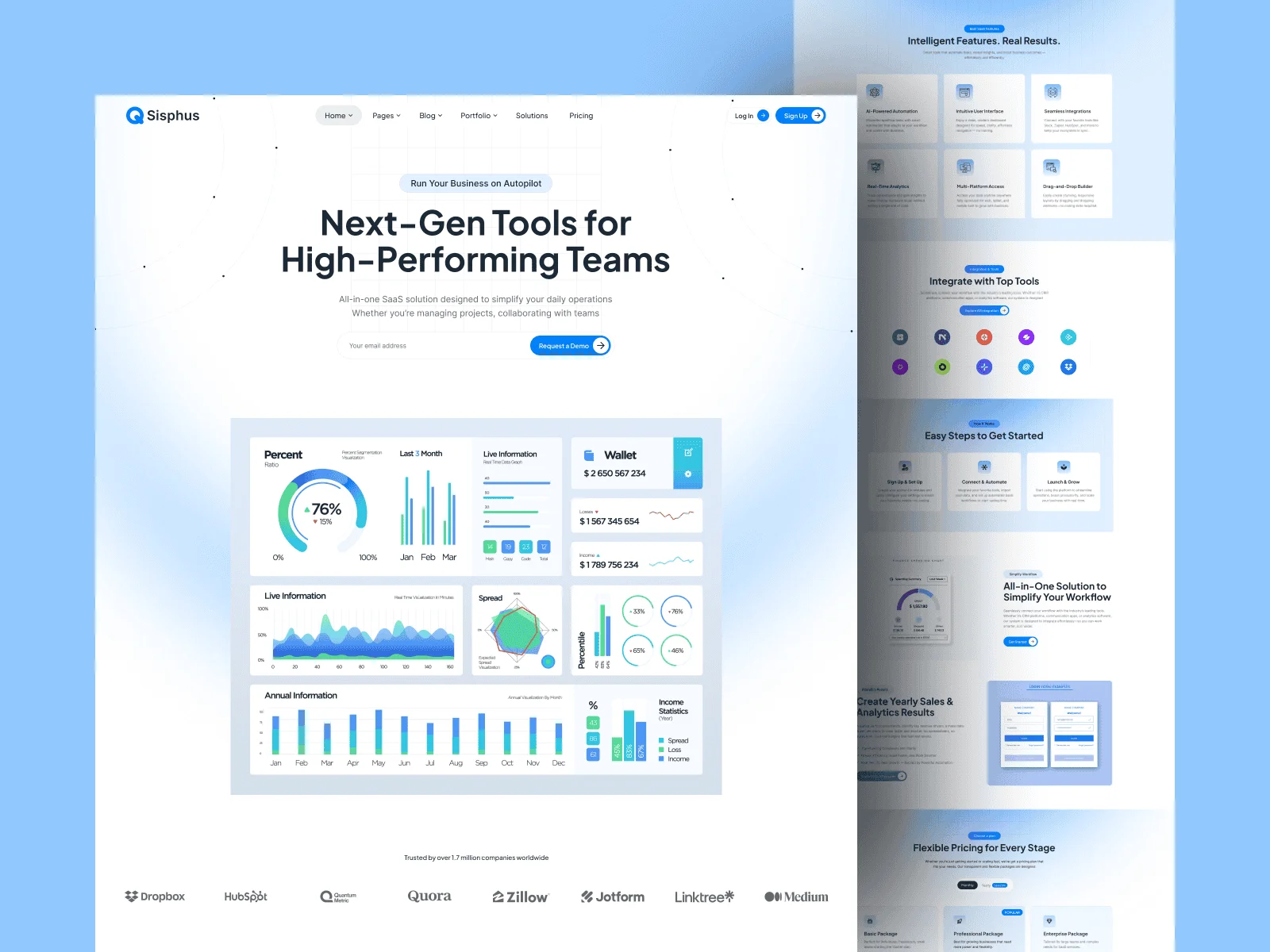
Medito is OrdainIT’s health and medical React JS website template with a shop, for clinics, hospitals, doctors and pharmacies. It includes 6+ home pages and 31+ pages, built with React 18.3+ and Redux Toolkit, with RTL support and free lifetime updates. Like most templates, it gives you the storefront; connect your own backend and payments. If you prefer WordPress, the Medito WordPress theme works with WooCommerce. We check speed and demos before release.

A template saves weeks of design and front-end work, but a live store needs more:
Use server rendering or static generation for product and category pages so search engines see full content. Next.js App Router templates handle this well. Optimise product images with responsive sizes, add structured data for products, and keep JavaScript bundles small. Test a product page with PageSpeed Insights on mobile, because product pages carry most of your traffic.
If you choose a front-end-only template, you still need somewhere to keep products and process orders. Common choices are a headless commerce platform such as Shopify, BigCommerce, Medusa or Saleor; a backend you build with Node.js and a database; or WooCommerce used headlessly through its REST API. Start by listing what your store needs, such as product variants, inventory, discounts, multiple currencies, subscriptions and digital downloads, then pick the backend that supports those features natively. Connecting a template to a mature platform is usually faster and safer than building payments and order logic yourself. Keep the template’s components as they are where possible, and change data fetching in one place so future updates are easier to merge.
A React ecommerce template usually ships with demo products, placeholder images and sample reviews. Replace them all before launch, set real prices and shipping rules, and run several test orders on a staging site, including a refund. Check emails, stock updates and mobile checkout before taking real payments.
It is a ready-made online store front end built with React or Next.js, with product, cart, checkout and account pages, sometimes with a backend or admin panel.
Usually not out of the box. Most need you to connect a payment provider and an order backend.
The three ThemeForest templates above cost $22 to $39 for a Regular License on 14 November 2026. Next.js Commerce is free under MIT.
Shopify handles products, payments and hosting for you. A React template gives more design control but needs development work; you can also combine both with a headless storefront.
Yes, if product pages are server-rendered or statically generated, with fast images and structured data.
Chosen a theme or template? The OrdainIT team, which designs and builds its own WordPress themes and templates, can also get your website live. Pick a fixed-price service:
Want a design to start from? Browse OrdainIT React and Next.js templates, with lifetime updates, or see all WordPress services. Not sure what you need? Contact OrdainIT for a free, no-obligation quote.
See OrdainIT’s themes and customer ratings on OrdainIT’s ThemeForest profile.




We reply 24 hours a day, Monday to Saturday. Sunday is our day off.