Free React templates range from small landing pages to full applications with sign-in, billing and dashboards, and the best ones are open source on GitHub. Two things matter more than stars: the licence, and whether the project is still maintained. Several famous templates are now archived. This guide compares six free React and Next.js templates using their GitHub pages on 14 November 2026, flags which are archived or unmaintained, and explains when a paid template is worth it.
This guide focuses on open-source repositories, because their licence and maintenance history are public.
We opened each GitHub repository page on 14 November 2026 and recorded stars, licence, stack, what is included and any maintenance notice. Star counts measure popularity, not quality. We did not deploy every template and we earn nothing from these links. OrdainIT does not currently sell a free React template, so we list our free design files and paid React templates separately.
GitHub repository pages checked 14 November 2026.
| Template | Stack | Stars | Licence | Status |
|---|---|---|---|---|
| Next.js SaaS Starter | Next.js, Postgres, Stripe | ~16,200 | MIT | Maintained |
| Open SaaS | Wasp, React, Node.js | ~15,500 | MIT | Maintained |
| Taxonomy | Next.js 13, Prisma | ~19,300 | MIT | Archived |
| Next.js Commerce | Next.js, Shopify | ~14,300 | MIT | Archived |
| developerFolio | React | ~6,600 | GPL-3.0 | Not actively maintained |
| gitfolio | Next.js 16, Tailwind 4 | ~65 | MIT | New |
The Next.js SaaS Starter in the Next.js organisation had about 16,200 stars under the MIT licence. It includes a marketing page, a pricing page connected to Stripe Checkout, email and password sign-in, subscription management and a team dashboard, using Postgres, Drizzle and shadcn/ui. View on GitHub.
Open SaaS by Wasp had about 15,500 stars under the MIT licence. It is built with React, Node.js, Prisma and PostgreSQL on the Wasp framework and includes a landing page, social sign-in, payments through Stripe, Polar.sh or Lemon Squeezy, and an admin dashboard. View on GitHub.
Taxonomy by shadcn had about 19,300 stars under the MIT licence and showcases Next.js 13 features with Prisma, NextAuth.js, Stripe, Tailwind CSS and MDX. It is archived: the README says it will no longer receive updates and is not recommended for production. Use it to learn patterns, not as a base. View on GitHub.
Next.js Commerce by Vercel had about 14,300 stars under the MIT licence: a server-rendered storefront using Shopify as the reference provider. The repository is archived, with development moved to Vercel’s new Shopify storefront. See our React ecommerce template guide for maintained options. View on GitHub.
developerFolio by saadpasta had about 6,600 stars under the GPL-3.0 licence: a React portfolio with sections for skills, experience, projects pulled from GitHub, talks and blogs. The repository states it is not actively maintained. View on GitHub.
gitfolio in the github-samples organisation had about 65 stars under the MIT licence. It is a small, modern portfolio on Next.js 16, React 19, Tailwind CSS 4 and TypeScript, with a GitHub Pages deployment workflow. View on GitHub.
Of the six, two are archived and one says it is not actively maintained. Archived projects still work as learning material, but dependencies age quickly in the React ecosystem, so you will update packages yourself and may hit breaking changes. Prefer maintained projects for anything you will run for years, and check the latest commits before you start.
MIT lets you use, change and sell projects built on the code if you keep the licence notice. GPL-3.0 also allows use and changes, but if you distribute modified code you must share it under the same licence. Read the licence file in each repository before you ship.
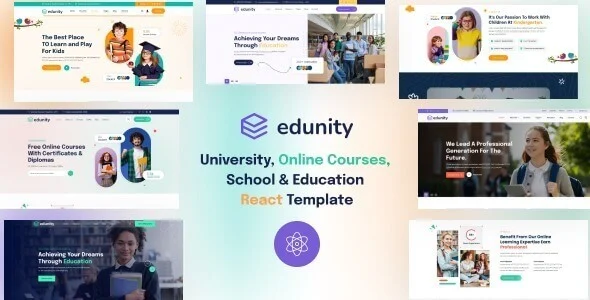
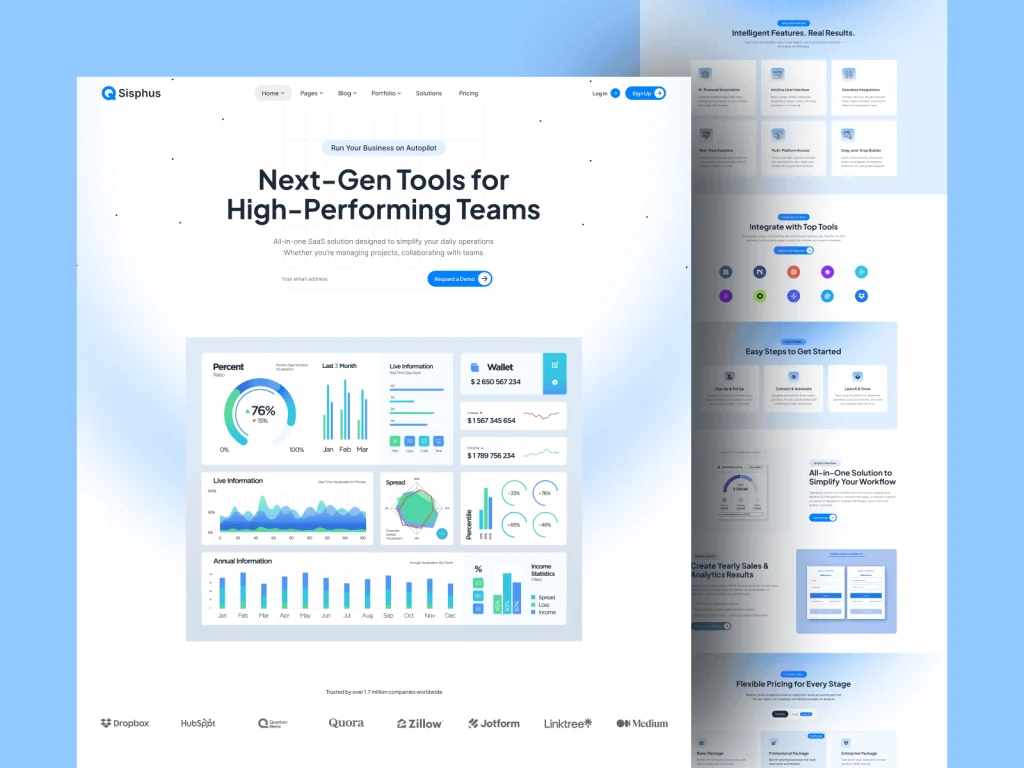
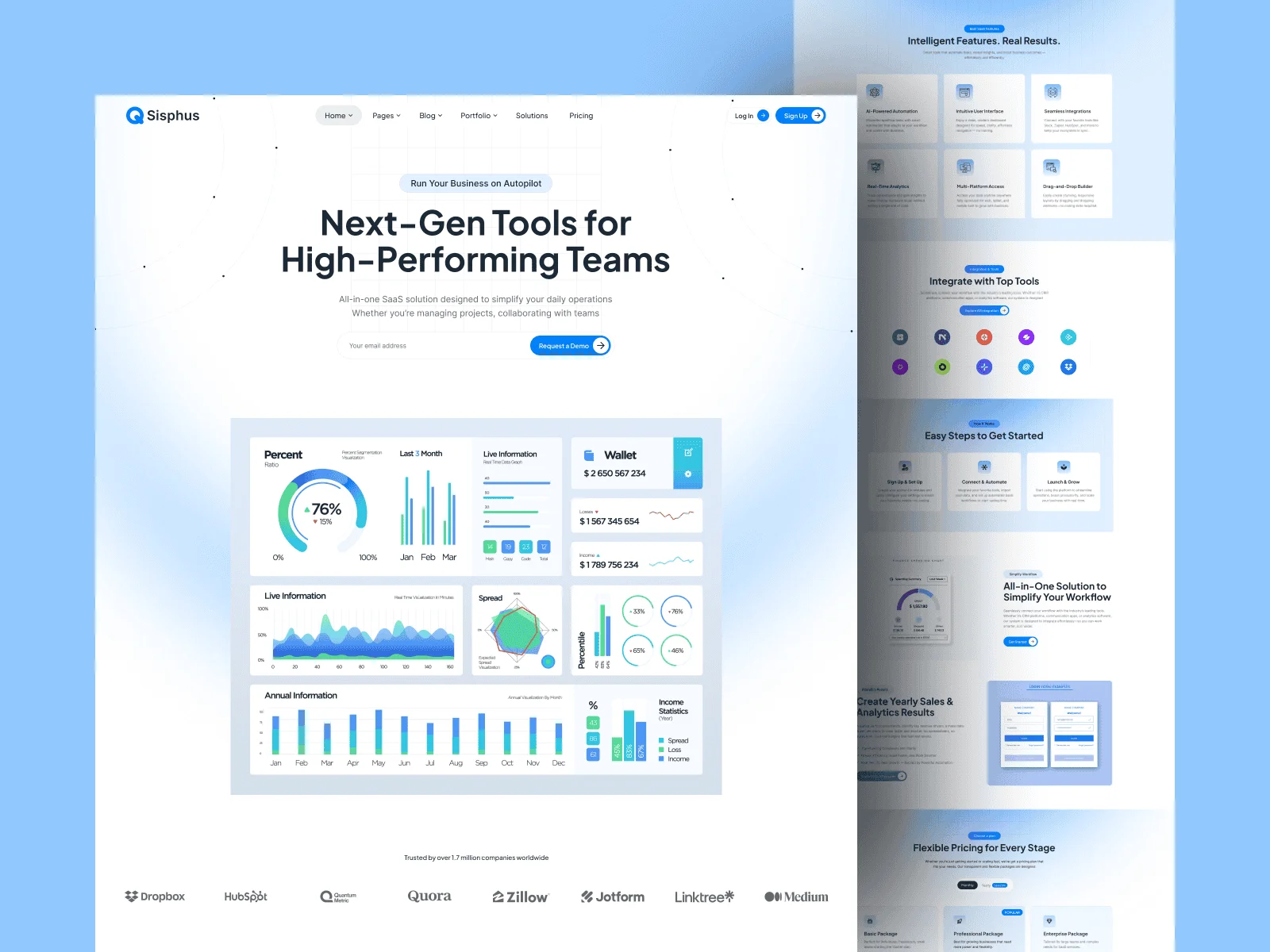
Paid templates make sense when you need a polished design for a specific industry, many ready pages, documentation and author support. OrdainIT’s React and Next.js templates include Edunity React for education, Medito React for health with a shop, Saasty Next.js for SaaS, and Sorex React for portfolios, each with free lifetime updates. If you want a free starting point, our free Figma designs such as Sisphus can be built in React, with attribution. We check speed and demos before release.
Most open-source React projects follow the same path from download to live site. Fork or clone the repository, then copy the example environment file and fill in your own keys for the database, authentication or payments. Install dependencies with the package manager the project uses, because mixing npm, pnpm and yarn can cause lockfile problems. Run the development server and click through every page. Before changing anything, run the tests and a production build to confirm the project works as delivered. Then rename the project, replace the branding and remove demo content. Deploy to a host such as Vercel, Netlify or your own Node.js server, and set the same environment variables there. Keep your fork linked to the original repository so you can pull fixes later, unless the project is archived.
Free templates come without support, so plan the time to understand the code. Budget a day to read the folder structure, routing, data fetching and styling approach before customising. For SaaS starters, also review authentication, database schema and webhook handling, because these parts carry the most risk. If the time cost looks larger than the price of a supported paid template, the paid option may be cheaper in practice.
When you build on someone’s free work, keep the licence file, credit the project in your README, and report bugs you find. If a fix helps others, open a pull request. Healthy open-source projects depend on users who give a little back.
Before you clone a repo, check its licence, the date of the last commit and the open issues list. Then run it locally and update the dependencies once, because an old starter that fails to build is not really free.
They are ready-made React or Next.js projects you can download at no cost, usually from GitHub, ranging from landing pages to full apps.
Often yes. MIT allows commercial use with the licence notice kept; GPL has share-alike conditions. Check each licence.
They work, but receive no updates. Expect to fix outdated dependencies yourself and avoid them for long-term production use.
Free suits developers who can maintain code. Paid suits teams that want an industry design, documentation and support.
Some do, such as Next.js SaaS Starter and Open SaaS. Many landing and portfolio templates are front end only.
Chosen a theme or template? The OrdainIT team, which designs and builds its own WordPress themes and templates, can also get your website live. Pick a fixed-price service:
Want a design to start from? Browse OrdainIT React and Next.js templates, with lifetime updates, or see all WordPress services. Not sure what you need? Contact OrdainIT for a free, no-obligation quote.
See OrdainIT’s themes and customer ratings on OrdainIT’s ThemeForest profile.



We reply 24 hours a day, Monday to Saturday. Sunday is our day off.